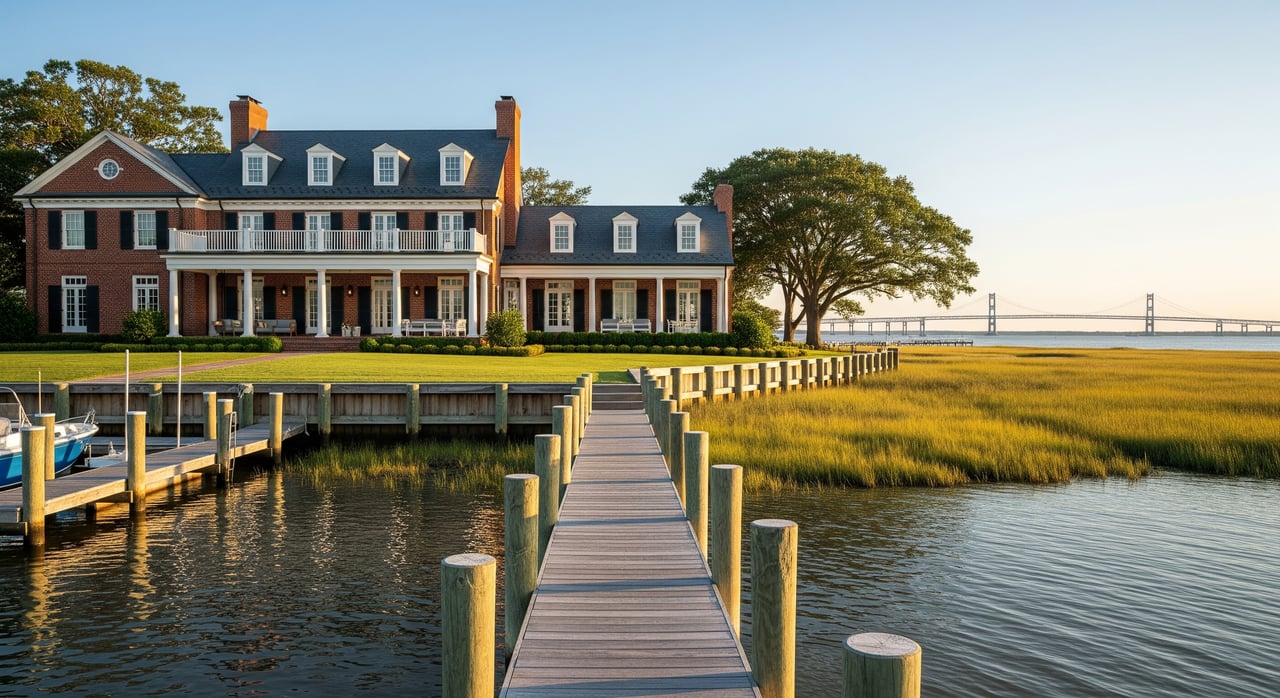
How the James River Bridge Shapes Home Demand
November 6, 2025
November 6, 2025
If you work on the Newport News side but love the space and value in Carrollton and northern Isle of Wight, one structure often decides how your day starts and ends: the James River Bridge. You are not imagining it. When traffic is smooth, life is easy. When the bridge lifts for river traffic or a lane closes for maintenance, your schedule can shift. In this guide, you’ll learn how the bridge actually operates, why it shapes buyer demand, what to test before you buy, and how to present your home if you’re selling. Let’s dive in.
The James River Bridge is the primary vehicle crossing that links Carrollton and northern Isle of Wight County with the Newport News Peninsula. Many residents rely on it for jobs, schools, healthcare, and services on the Peninsula. Because there are only a few James River crossings, the bridge acts as a choke point. Disruptions ripple across commute times for a large share of local drivers.
Daily users include commuters, school buses, and commercial trucks. Marine traffic on the James River also matters because certain vessels require the bridge to lift, which temporarily stops roadway traffic.
Bridge lift operations are governed by the U.S. Coast Guard under federal drawbridge rules in 33 CFR Part 117. You can review the governing framework in the official regulations for drawbridges in 33 CFR Part 117. Local operating notices and special schedules, if any, are published through the Coast Guard’s Local Notices to Mariners and by the bridge owner or operator.
When the bridge opens for a vessel, traffic stops on both sides. How often and how long that pause lasts can vary by day and season. You typically see more recreational and boating activity in summer, which can increase openings. For live roadway advisories and closures, check VDOT 511 Virginia. For maritime notices, review the Coast Guard’s Local Notices to Mariners for the Fifth District.
The bridge affects what many buyers value most: a commute that is not just fast, but reliable. Homes close to the Isle of Wight approach often attract Peninsula workers because they minimize exposure to delays on local roads. Buyers with strict start times, like shift workers or families juggling school drop-offs, tend to prioritize predictability. If openings feel frequent or unpredictable, some buyers lean toward locations with alternate routing or choose the Peninsula instead.
For sellers, this creates a straightforward positioning opportunity. You can highlight when your commute window is typically smooth and be transparent about lift-related pauses. Buyers will respond to honest information and practical guidance on how to test the commute themselves.
Use this simple plan before you write an offer:
To learn how reliability trends compare across the region, you can also review regional congestion and travel-time materials from the Hampton Roads Transportation Planning Organization.
Help buyers picture everyday life with your home:
Honesty builds trust, improves showings, and helps serious buyers move forward with confidence.
When the JRB slows down, you still have options. Many commuters evaluate the Monitor–Merrimac Memorial Bridge–Tunnel on I‑664 through Suffolk to reach Newport News, even if it adds miles. Local detours through western Suffolk can also work during incidents, but they typically add time compared with a normal JRB crossing.
Create simple decision rules:
The bridge influences daily life in ways beyond the drive. Areas near primary approaches and intersections can experience heavier truck and pass-through traffic, which some residents prefer to avoid. Seasonal boating and weekend visitors can increase mid-day congestion in summer months. School bus routing and emergency response use the same arterial network, so repeated bridge-related delays can shape how residents perceive service reliability.
Use these trusted sources for facts, not guesses:
You can absolutely enjoy Isle of Wight living and keep a commute that works for your life. The key is testing your route, using live tools, and choosing a home that matches your tolerance for variability. If you want help mapping realistic commute scenarios and balancing them with your wish list, reach out to Unknown Company. Call Jason Today — Let’s find your Hampton Roads home.
Stay up to date on the latest real estate trends.

Real Estate
Maximize Your Property's Value and Enhance Your Financial Future
Lifestyle
Explore the Must-See Sights and Activities in Norfolk

Real Estate
A Local Guide To Elevating Comfort, Security, And Energy Efficiency In Hampton Homes


Lifestyle
Unlock the Perfect Palette for Your Portsmouth Residence
Real Estate
Connect With Leading Real Estate Experts in Virginia Beach
Real Estate
Enhance Your Norfolk Home with the Latest Smart Technology
Whether you're settling into civilian life, buying your first home, or making your next big move, I'm here to guide you every step of the way. Let’s make your next move the right one—together.

Jason Dunaway
555 Belaire Ave Ste 270 Chesapeake VA 23320